Table of Contents
- What a Private Label Toner Line Actually Requires
- Define the Format Before the Formula
- MOQ, Lead Time, and Documentation
- Why Alcohol-Free Toner Private Label Formulations Outperform
- The Shift Away From Astringent Toners
- Who Buys Alcohol-Free
- Formulation Levers We Use
- The Case for a Hydrating Toner OEM Build
- Hydration as the Anchor Benefit
- Actives You Can Layer In
- Comparing Toner Directions for Retail
- Why Partner With a Toner / Essence OEM-ODM Manufacturing Factory
- Start Your Private-Label Toner Line
What a Private Label Toner Line Actually Requires
A private label toner program is more than a bottle and a label. As an OEM/ODM manufacturer, we treat toner as a precision aqueous system: water phase, humectants, low-dose actives, and a preservation system that stays stable across climate zones. The brand owner controls the story, the positioning, and the claims; the factory controls the formula integrity, the documentation, and the batch consistency.
Define the Format Before the Formula
Toners today span three practical formats:
- Hydrating essences — lightweight, serum-like, built around humectants and soothing agents.
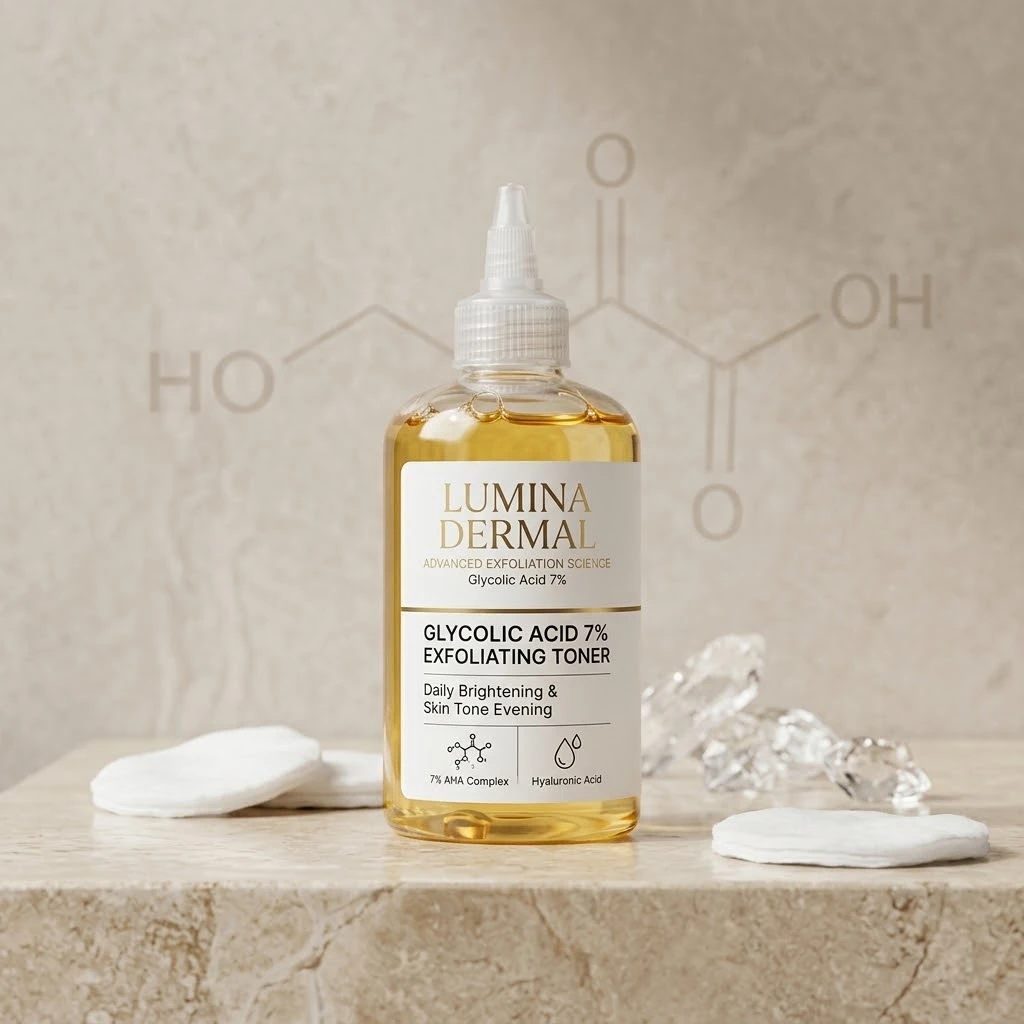
- Clarifying toners — formulated to support smoother-looking skin through gentle exfoliating acids.
- Refreshing mists and balancing waters — positioned for on-the-go or post-cleanse use.
Most first-time brands do best starting with one hero hydrating SKU and expanding once retail velocity is proven. A focused launch also keeps tooling, MOQ, and lead times manageable.
MOQ, Lead Time, and Documentation
Reasonable minimum order quantities let a startup test the market without tying up capital. Expect a typical path of: brief → sample formulation → stability and compatibility testing → pilot batch → full production. Reliable factories supply the COA, MSDS, and formulation records a brand needs for its own regulatory file. If your brand also plans a private label face cream, aligning both products under one OEM partner simplifies documentation and speeds time to market.
Why Alcohol-Free Toner Private Label Formulations Outperform
The single biggest formulation decision for a new line is whether to include denatured or high-proof alcohol. For most modern retail audiences, an alcohol free toner private label approach is the stronger commercial choice.
The Shift Away From Astringent Toners
Older toners relied on alcohol to deliver an immediate “clean” feel. That sensation reads as effective to some users, but it can also leave skin feeling tight and looking flushed — a poor fit for the barrier-friendly positioning most brands now want. Alcohol-free systems instead use humectants and mild solvents to refresh the skin and prepare it for the steps that follow.
Who Buys Alcohol-Free
Alcohol-free toners appeal to a broad base: sensitive-skin users, barrier-conscious buyers, and anyone building a minimal, daily routine. That breadth translates into wider retail distribution and fewer returns. For a brand sourcing a private label face wash alongside its toner, an alcohol-free toner extends the same gentle, everyday-use promise across the regimen.
Formulation Levers We Use
- Glycerin and betaine as primary humectants for a supple after-feel.
- Panthenol and allantoin to support a calm, comfortable skin surface.
- Low-molecular and high-molecular hydrators for both immediate and sustained feel.
- Mild, broad-spectrum preservation suited to leave-on products.
None of these are medical claims. They describe the in-product experience a formula is designed to deliver.
The Case for a Hydrating Toner OEM Build
Where alcohol-free defines what you leave out, a hydrating toner OEM build defines what you put in. Hydration is the most universally wanted benefit in toner, and it is also the easiest to communicate on a shelf or a product page.
Hydration as the Anchor Benefit
A hydrating toner is formulated to replenish moisture after cleansing and to support the absorption of subsequent products. For the brand, that means a clear, defensible message: “prep and hydrate.” For the user, it means a step they will actually repeat morning and night — exactly the habit that drives reorder revenue.
Actives You Can Layer In
Hydrating bases accept a range of cosmetic-grade additions:
- Niacinamide, formulated to support a more even-looking skin tone.
- Centella or green-tea derivatives, selected for a soothing sensory profile.
- Low-dose PHA or AHA systems for a gentle, clarifying variation (kept within cosmetic scope).
- Hyaluronic acid complexes for a plump, refreshed finish.
Each addition should be justified by the target market and the brand’s compliance file. We help brand owners choose actives that are stable, documented, and appropriate for the intended region. Brands working with a private label skincare manufacturer often consolidate toner, serum, and cream development under one formulation team to keep the regimen coherent.
Comparing Toner Directions for Retail
Choosing a direction is easier once you map the trade-offs.
| Direction | Best for | Retail strength | Watch-outs |
|---|---|---|---|
| Alcohol-free hydrating | Daily use, sensitive skin | Broad appeal, low returns | Needs strong humectant system |
| Gentle exfoliating | Texture-focused buyers | Clear “glow” story | pH and acid limits per market |
| Balancing/mist | On-the-go, spa channels | Impulse and add-on sales | Lower repeat frequency |
For a first line, the alcohol-free hydrating direction is usually the lowest-risk entry: it satisfies the largest audience and pairs cleanly with cleanser and moisturizer sales.
Why Partner With a Toner / Essence OEM-ODM Manufacturing Factory
As a toner / essence OEM-ODM manufacturer, our role is to turn a brand brief into a stable, manufacturable, market-ready product. That means formulation support from concept to scale, pilot and stability testing, flexible MOQs for growing brands, and the documentation needed for compliant export. We manufacture to cosmetic-grade standards and can align production with recognized frameworks such as ISO 22716 where applicable.
A good factory partnership also protects the brand’s upside. By consolidating toner with adjacent SKUs — for example a private label face mask for a regimen bundle — a brand reduces supplier overhead and builds a more complete shelf story without multiplying its vendor list.
Start Your Private-Label Toner Line
Ready to move from brief to bench? Request a formulation quote and our OEM brochure, and we will scope a sample program around your target market, MOQ, and retail channel. Whether you start with a single alcohol-free hydrating hero or a two-SKU toner and essence set, our formulation team will help you build a line that is stable, documentable, and ready for retail.
Explore our full private-label capabilities or pair your toner launch with a complementary private label skincare manufacturer program to round out the regimen.
Compliance note: This article is published by an OEM/ODM manufacturer for informational purposes. All product claims, labeling, and marketing copy are the responsibility of the brand owner and must comply with the regulations of the target market (e.g., FDA, EU Cosmetic Regulation 1223/2009, ISO 22716). No medical or therapeutic claims are intended.
Looking to Formulate Your Own Skin Care Brand?
We support low MOQ customization, GMPC/ISO certified cleanrooms, stability testing, and free formulation sampling for global brand owners.